
Vind je eigen vermoeidheidspatroon
Jouw vermoeidheid heeft een patroon dat specifiek voor jou is — je curve, je triggers, je kantelpunt. In een paar minuten zie je het helder.
- Negen korte vragen — geen goede of foute antwoorden
- Je ziet meteen je patroon en waar je staat
- En één rustige, concrete volgende stap
Dit is een zelftest om je eigen patroon te leren zien — geen medische diagnose en geen vervanging van je zorg. Merk je iets nieuws of verontrustends aan je gezondheid, bespreek dat dan met je arts.
Waar mag ik je uitslag naartoe sturen?
Je ziet je patroon zo meteen op het scherm. Ik stuur je ook een kopie, samen met de eerste stap.
Je gegevens worden veilig en volgens de AVG bewaard. Geen spam, nooit doorverkocht.
Deze zelftest laat je je eigen ervaren vermoeidheidspatroon zien. Het is geen medisch onderzoek, geen diagnose en geen klinische plaatsing. Het herstelprogramma loopt naast je medische zorg, nooit in plaats daarvan.
-
Post-Stroke Rehabilitation: Neurophysiology Processes of Bilateral Movement Training and Interlimb Coupling—A Systematic Review
https://doi.org/10.3390/jcm14113757 -
Reconnecting Brain Networks After Stroke: A Scoping Review of Conventional, Neuromodulatory, and Feedback-Driven Rehabilitation Approaches
https://doi.org/10.3390/brainsci15111217 -
Quadrupedal Training Approaches in Post-Stroke Rehabilitation: A Scoping Review of Evidence, Mechanisms, and Clinical Applications https://doi.org/10.3389/fnsys.2026.1773330
-
Modifying center of pressure to reduce fall risk in adult stroke survivors: a scoping review. https://doi.org/10.3389/fneur.2026.1773299
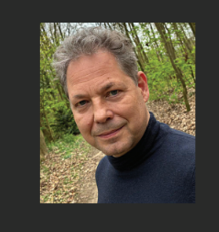
The window for meaningful stroke recovery does not close at six months. Most survivors are told it does. This book explains why that is wrong — and what becomes possible when the right approach is applied to the right parts of the nervous system, in the right sequence."
Every year, fifteen million people survive a stroke. Most walk away from rehabilitation technically improved — but fundamentally incomplete. The fatigue persists. The sharpness is missing. The coordination never fully returns. For decades, clinicians and survivors alike have attributed this plateau to the natural limits of neurological recovery.
What if the plateau is not the limit of the nervous system, but the limit of the programme?
Drawing on clinical, developmental neuroscience, and 3 decades of clinical practice, Dr. Jan Arjen Kuipers and co-inventor Linda Rådestad present a three-layer framework that addresses what standard rehabilitation was never designed to reach.
For the stroke survivor who knows something remains possible — and for the clinician who needs a framework to deliver it..